Collagen and Probiotic Gummy Synergy: Formulation Challenges Solved
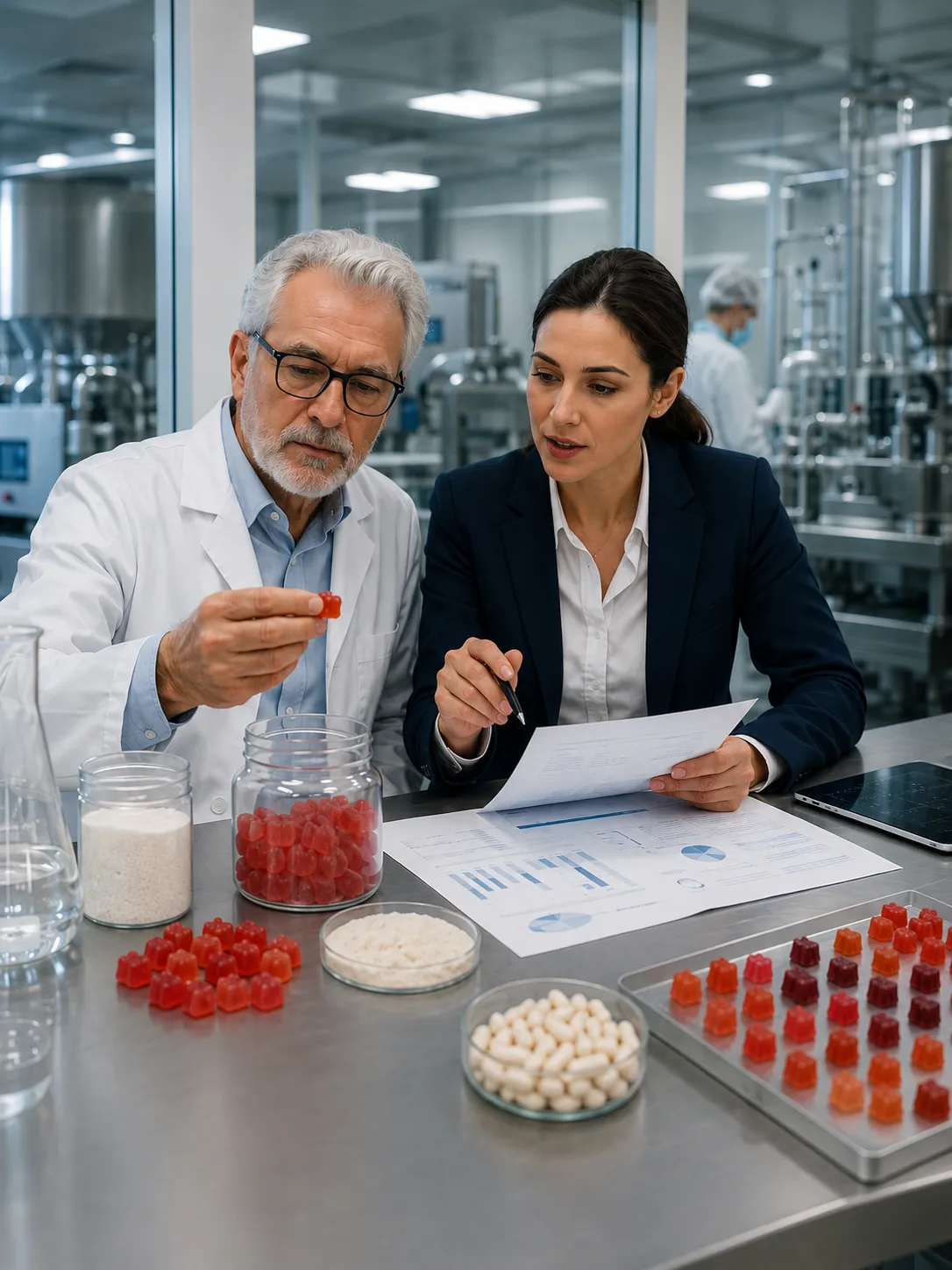
The beauty-from-within category has shifted. A single-ingredient collagen supplement is no longer enough to command a premium price. Modern consumers understand the gut-skin axis - the scientific link between a healthy microbiome and skin barrier function, hydration, and inflammation reduction.
Consequently, the "holy grail" product for many premium wellness brands is a dual-action gummy: combining collagen (or vegan collagen alternatives) with skin-specific probiotic strains in a single, delicious dose.
The marketing synergy is brilliant. The manufacturing synergy is a nightmare.
Collagen and probiotic gummy synergy challenges are among the most difficult technical hurdles in modern nutraceutical manufacturing. Combining a massive structural protein with a fragile, living microorganism inside a high-moisture pectin matrix causes competing chemical reactions that routinely ruin batches. Here is why this specific combination fails so often, and the formulation science required to make it stable.
The Clash of Two Extreme Ingredients
To understand the problem, you have to look at what collagen and probiotics physically demand from their environment.
The Collagen Problem: Mass and Moisture
Collagen peptides are bulky. A clinically relevant dose of collagen (typically 500mg to 1000mg per serving) takes up a massive amount of physical space inside a 3-gram gummy.
To dissolve this much protein powder into the gummy base, manufacturers have to use more water during the cooking phase. More water increases the water activity (Aw) of the final gummy. High water activity makes the gummy softer, stickier, and more prone to microbial spoilage.
Furthermore, collagen peptides contain amino acids that can react with reducing sugars in the gummy base (the Maillard reaction), causing the gummy to turn brown and develop a burnt, off-putting flavour over time.
The Probiotic Problem: Heat and Fragility
Probiotics are living bacteria. They die when exposed to the high heat required to cook the gummy base (80°C - 95°C). They also die rapidly when exposed to high moisture environments - such as a gummy loaded with water to dissolve a massive dose of collagen.
When you put these two ingredients together, you create a paradox:
- The collagen requires high heat and moisture to dissolve and integrate into the gel.
- The probiotics require low heat and low moisture to survive.
If a manufacturer simply mixes them both into the tank, you get a sticky, brown gummy with zero viable probiotic cells.
Learn about Probiotic Gummies Manufacturing
Solving the Collagen-Probiotic Paradox
Standard contract manufacturers usually fail this brief. Solving it requires advanced formulation architecture, typically relying on three specific interventions.
1. Patented Probiotic Encapsulation
You cannot use raw, lyophilized (freeze-dried) probiotic powder in this formulation. The bacteria must be shielded from the high water activity created by the collagen.
The solution is advanced microencapsulation. The probiotic cells are coated in a protective lipid or polymer matrix that creates a physical barrier against moisture and heat. This allows the probiotics to be added to the gummy base while it is still warm enough to be liquid, without killing the bacteria. Once consumed, the encapsulation dissolves in the digestive tract, releasing the live cultures.
2. Vegan Collagen Alternatives (The Clean-Label Fix)
Animal-derived marine or bovine collagen is difficult to work with in pectin gummies, and it alienates the premium vegan market.
Many advanced formulations bypass animal collagen entirely, using a "vegan collagen builder" complex instead. This is a highly specific blend of amino acids (glycine, proline, hydroxyproline), vitamin C, and botanical extracts that provides the building blocks the body needs to synthesize its own collagen.
Because amino acid isolates are more soluble and less bulky than whole collagen peptides, they require less water to integrate into the gummy. This lowers the water activity, preserving the texture of the pectin gel and drastically improving the survival rate of the encapsulated probiotics.
3. Staged Temperature Addition
The manufacturing process must be re-engineered. The pectin, sweeteners, and collagen (or amino acids) are cooked at high heat to ensure full dissolution. The mixture is then rapidly cooled to a highly specific, narrow temperature window - cool enough not to instantly melt the probiotic encapsulation, but warm enough that the pectin hasn't set into a solid block.
The encapsulated probiotics are injected at this exact moment, immediately before depositing into the moulds.
Choosing the Right Probiotic Strains for Skin Health
If you are going through the immense technical effort of combining these ingredients, you must use strains clinically validated for the gut-skin axis, not just generic gut-health bacteria.
- Lactobacillus rhamnosus: Extensively studied for its ability to modulate skin inflammation and support barrier function, often used in eczema and acne research.
- Lactobacillus plantarum: Known for its antioxidant properties and potential to improve skin hydration and elasticity.
- Bifidobacterium longum: Shown to help reduce UV-induced skin damage and systemic inflammation.
These Lactobacillus and Bifidobacterium strains are notoriously heat-sensitive. They absolutely require the encapsulation technology mentioned above to survive the gummy manufacturing process.
(Note: Bacillus coagulans is a heat-stable, spore-forming strain often used in cheap gummies because it survives the cooking process easily. However, its specific clinical evidence for skin health is less robust than the Lactobacillus strains.)
Learn about Vegan & Pectin Gummies
Stability Testing: The Only Proof That Matters
Because the interactions between collagen proteins, moisture, and live bacteria are so volatile, you cannot trust a theoretical formulation.
A manufacturer might successfully produce a pilot batch that looks beautiful and tests well on Day 1. But by Day 90, the collagen may have caused the gummy to harden into a rock, or the moisture may have killed 90% of the probiotics.
Do not launch this product without accelerated stability testing.
You must demand a 3-month accelerated stability report (at 40°C and 75% relative humidity) that tracks:
- Probiotic CFU viability (to ensure they survive the moisture)
- Water activity (Aw) drift
- Texture profile analysis (to ensure the collagen isn't ruining the chew)
- Colour degradation (to check for Maillard browning)
If a manufacturer refuses to run stability testing on a collagen-probiotic blend, walk away. They are passing the risk of a failed product entirely onto your brand.
FAQ
Can I get 10,000mg of collagen in a gummy? No. A standard gummy weighs between 2.5g and 3.5g total. It is physically impossible to put a high-dose powder scoop of collagen into a gummy format. Collagen gummies typically offer 50mg to 500mg per serving. This is why "vegan collagen builders" (highly concentrated amino acids and co-factors) are often a better strategic choice for the gummy format.
Why do my collagen gummies taste bad after a few months? Collagen peptides contain amino acids that react with sugars when exposed to heat and moisture (the Maillard reaction). This reaction creates a brown colour and a burnt, bitter flavour over time. Proper pH balancing and moisture control during formulation prevent this.
Is marine collagen better than bovine for gummies? Marine collagen generally has a lower molecular weight, making it slightly easier to dissolve in a gummy base. However, it can carry a distinct "fishy" off-note that is extremely difficult to mask with natural fruit flavours. Bovine is easier to flavour, but vegan amino-acid blends are the easiest to flavour and the cleanest to formulate with.
Formulating a Premium Beauty Gummy?
If you want to build a true dual-action, gut-skin axis gummy that combines collagen support with live, stable probiotics, you need a manufacturing partner with deep formulation science.
We specialize in high-load, complex pectin formulations and patented probiotic stabilisation technology. Share your brief with our R&D team to understand the real development timeline and costs.
Request a Project Brief Explore Export-Ready Manufacturing
Want to discuss your formulation?
Our experts help brands launch technically complex probiotic and functional gummies.