The Gummy CMO Audit: What to Look For During Your Facility Walkthrough
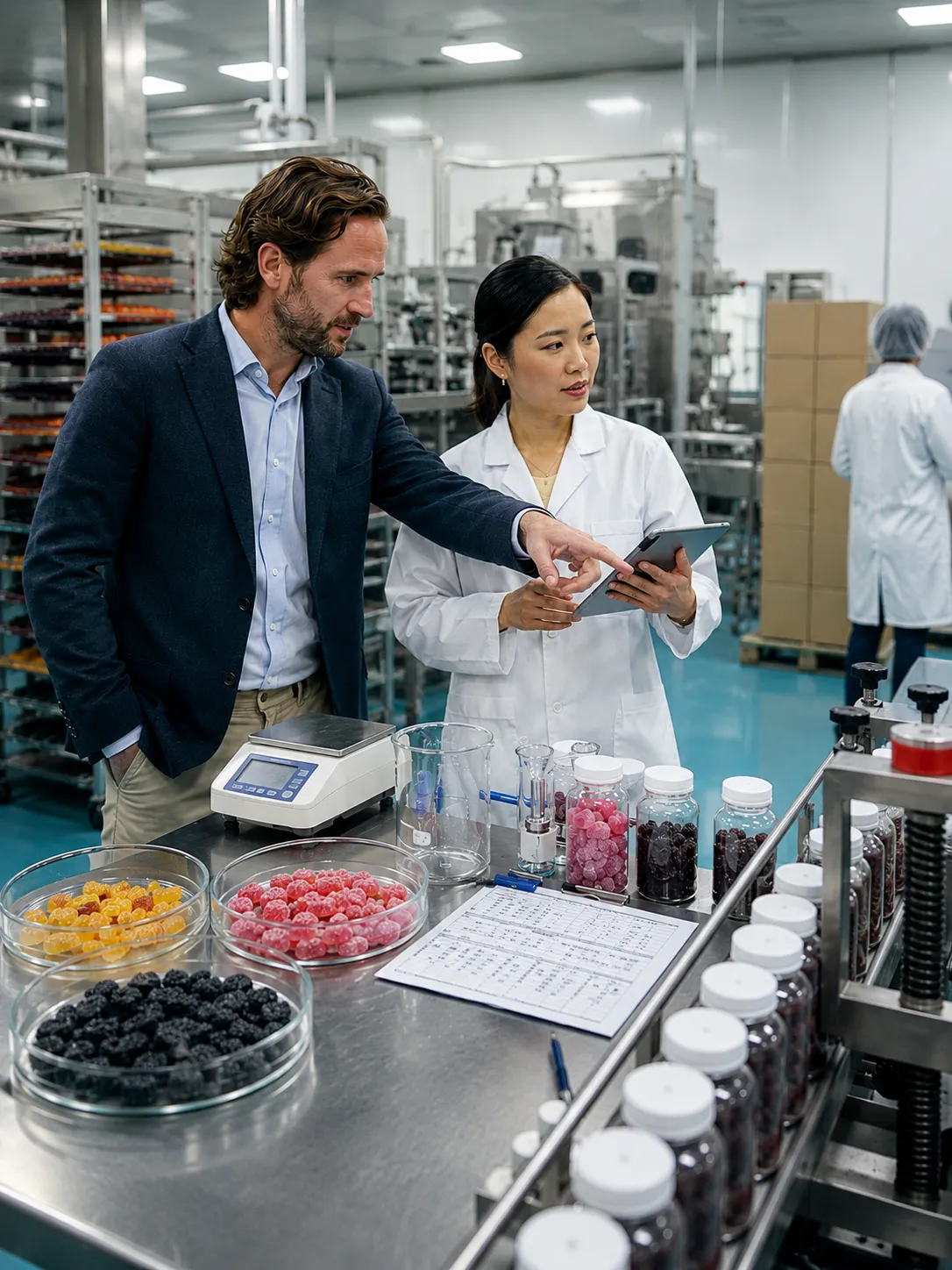
You found a contract manufacturer in India. The sales team was responsive, the pricing was excellent, and the samples they sent to your UK office tasted perfect. Before signing the Master Manufacturing Agreement (MMA) for a 500,000-unit annual contract, you book a flight to conduct a physical facility audit.
When you walk onto the factory floor, what exactly are you looking for?
If you are a brand founder or a buyer without a background in food science or QA engineering, a factory tour can be overwhelming. Stainless steel tanks all look the same, and everyone wears a hairnet. However, the difference between a world-class, export-ready facility and a high-risk operation is usually visible in the details.
Here is the definitive facility audit checklist for gummy CMO operations. This is what you must look for during your physical walkthrough to ensure the facility can actually deliver the quality they promised in their sales deck.
1. The Perimeter and Gowning (First Impressions Matter)
The audit begins before you even see the manufacturing line.
What to look for:
- Pest Control: Are there visible bait stations around the exterior perimeter? Are the loading dock doors sealed tight when closed, or can you see daylight underneath them? (Rodents and insects love sweet, sticky gummy factories).
- Gowning Procedures: Did they make you wash your hands, sanitize your shoes (or wear booties), don a hairnet, a beard net, and a lab coat before entering the production area? Did they enforce this strictly, or casually wave you through?
- Airflow: When you open the door to the production area, the air should blow outward (positive pressure). This prevents dust and contaminants from entering the clean manufacturing space.
2. The Raw Material Warehouse (Traceability)
The warehouse tells you how organized the manufacturer is before production even starts.
What to look for:
- Quarantine Area: When new ingredients arrive, they must be held in a clearly marked "Quarantine" area (physically or digitally) until QC tests them and approves them for use. If raw materials are just stacked randomly upon arrival, their QA system is failing.
- Allergen Segregation: If the facility processes dairy, soy, or nuts, these allergens must be stored on separate racks, preferably physically distanced or on the bottom racks to prevent spillage onto non-allergenic ingredients below.
- Climate Control: Probiotics, vitamins, and pectin must be stored in temperature- and humidity-controlled environments. Check the temperature logs on the wall - are they being filled out daily?
3. The Kitchen (Mixing and Cooking)
This is where the formulation science happens.
What to look for:
- Automated Controls: Is the cooking temperature controlled by digital PLCs (Programmable Logic Controllers), or is an operator turning a manual valve and looking at a dial thermometer? Pectin gummies require precise temperature control; manual valves introduce massive human error.
- Addition Points: Ask the guide, "Where do you add the probiotics/vitamins?" They should point to a specific point after the high-heat cooking phase, typically in a mixing tank just before depositing. If they add sensitive actives into the main boiling kettle, your actives will die.
- Cleanliness: The floor should not be sticky. Gummy base is essentially boiling syrup; spills happen, but a premium facility cleans them immediately.
4. The Depositing Line
This is the machine that squirts the liquid gummy base into the moulds.
What to look for:
- Mould Type (Starch vs. Silicone): Starch moguls (where gummies are deposited into trays of cornstarch) are traditional but highly dusty and pose cross-contamination risks. Silicone or metal moulds (starchless depositing) are vastly superior for functional gummies, pharmaceutical-grade cleanliness, and avoiding starch-related microbial issues.
- Line Speed and Scrap: Is the machine running smoothly, or is there a pile of rejected, misshapen gummies accumulating in a scrap bin? High scrap rates indicate poor formulation stability or poorly calibrated machinery.
5. The Curing Rooms (The Bottleneck)
After depositing, gummies must sit in climate-controlled rooms for 24 to 72 hours to dry and set.
What to look for:
- Capacity: Count the racks. A CMO might have a massive depositing line capable of 1 million gummies a day, but if they only have curing room space for 200,000, their actual capacity is bottlenecked. This causes the lead-time delays that plague brands.
- Environmental Controls: The curing rooms must have robust, specialized HVAC systems tightly controlling humidity and temperature. It should feel distinctly dry when you walk in.
Explore Functional Gummy Manufacturing
6. Packaging and Labelling
The final stage, where the product meets the brand.
What to look for:
- Induction Sealing: Watch the capping machine. Is there an induction sealer welding the foil barrier to the top of the bottle? Ask to see an operator test a seal (they should periodically pull a bottle off the line and physically check the seal strength).
- Line Clearance: Ask, "What happens when you switch from packaging Brand A to Brand B?" The line must be completely cleared of all previous bottles and labels before the new run starts. "Mixed labels" are a major cause of product recalls.
7. The In-House Laboratory
A CMO without an in-house lab is flying blind. While you still want third-party CoAs for final release, the CMO must do in-process testing.
What to look for:
- Equipment: Do they have an HPLC (High-Performance Liquid Chromatography) machine for assaying vitamins? Do they have incubators for micro-testing?
- Stability Chambers: Ask to see their environmental chambers where they run accelerated stability tests (40°C/75% RH). If they don't have these, they cannot validate your shelf life.
The Ultimate Audit Question
As you conclude the tour, ask the Plant Manager this question: "Can you walk me through the OOS (Out of Specification) report for the last batch that failed?"
A bad CMO will say, "We never have failed batches." That is a lie. Every factory has deviations. A premium CMO will pull up a report showing a batch that failed a weight check or an assay, and show you exactly how the QA team halted the line, investigated the root cause, documented the fix, and destroyed the non-compliant product.
Transparency regarding failures is the ultimate proof of a robust Quality Assurance system.
FAQ
Do I need to hire a professional auditor, or can I do it myself? If you have no manufacturing experience, hiring an independent GMP auditor for a day rate is a highly recommended investment before signing a massive contract. However, as a brand founder, you should still walk the floor yourself to assess the culture, cleanliness, and communication of the facility.
What is a GFSI certification, and should I look for it? The Global Food Safety Initiative (GFSI) recognizes several top-tier food safety standards, including BRCGS, SQF, and FSSC 22000. If an Indian CMO holds one of these certifications, it proves they have passed a grueling third-party audit and operate to the highest international standards.
Can I audit the facility unannounced? Most CMO contracts require you to give reasonable notice (e.g., 14 days) before an audit. However, during the audit, you should be allowed to view any area of the facility related to your product's production.
Audit Our Export-Ready Facility
If you are evaluating manufacturing partners in India for an international gummy launch, we invite you to audit our operations.
Probiota Innovations operates a state-of-the-art, US-FDA registered, and internationally certified facility in Mysuru. We pride ourselves on total transparency, from our advanced starchless depositing lines to our dedicated stability testing chambers.
Explore Export-Ready Manufacturing Request a Project Brief
Want to discuss your formulation?
Our experts help brands launch technically complex probiotic and functional gummies.