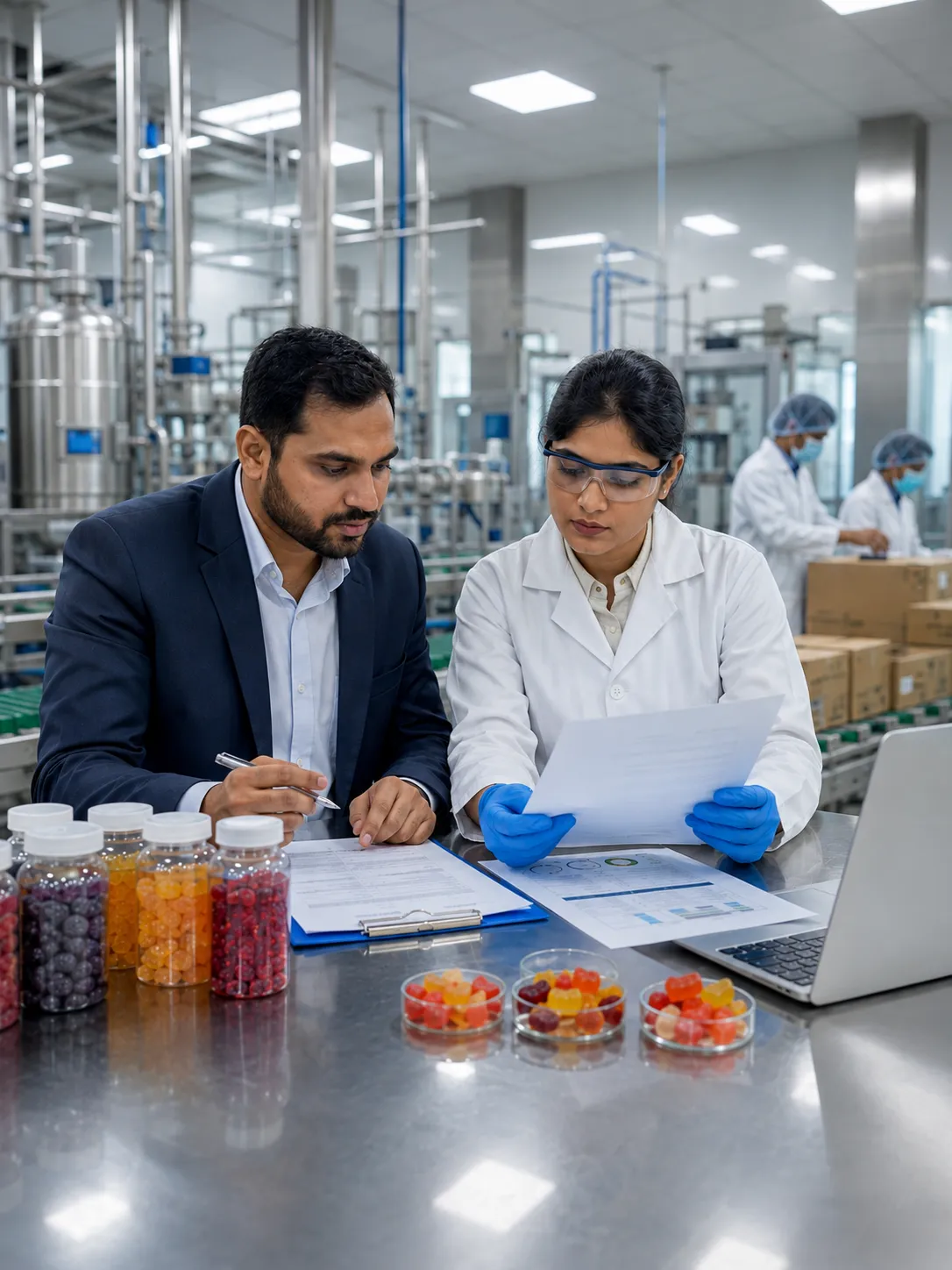
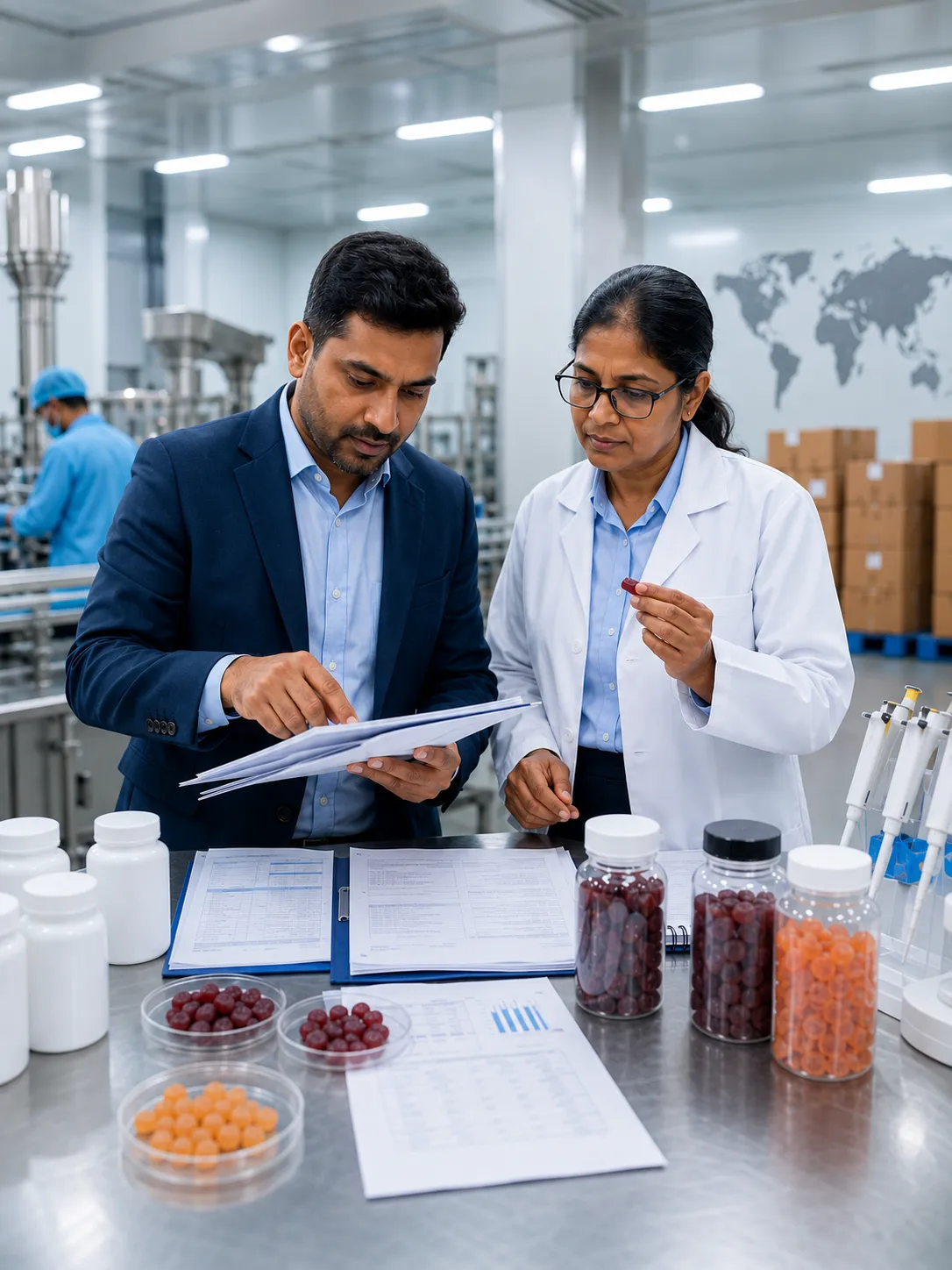
Partnering an Indian Gummy Manufacturer with a US D2C Brand

The US Direct-to-Consumer (D2C) supplement market is brutal. Customer Acquisition Costs (CAC) on Meta and Google are at all-time highs. Amazon takes an increasingly large cut of every transaction. For a US-based wellness brand, survival relies entirely on gross margin.
Traditionally, US brands relied on domestic contract manufacturers in California, Utah, or New Jersey. But domestic manufacturing costs have surged. A premium, multi-active pectin gummy that costs $3.50 per bottle to manufacture domestically leaves no room to absorb a $20 CAC and still turn a profit.
To survive, US D2C brands are moving their supply chains off-shore. But moving to a generic, low-tier facility in Asia destroys retention rates. The strategic solution that many successful mid-market D2C brands are adopting is partnering an Indian gummy manufacturer with their US operations.
Here is exactly how US brands leverage the Indian nutraceutical sector to secure a structural cost advantage without sacrificing product efficacy or FDA compliance.
Why India? The Sweet Spot of Science and Margin
When a US brand looks to off-shore gummy production, they typically evaluate China, Vietnam, and India.
China and Vietnam are optimized for massive volume and generic formulations (e.g., millions of basic gelatin Vitamin C gummies).
India, however, is a global pharmaceutical hub. Its nutraceutical industry is built on a foundation of deep formulation science, large pools of PhD chemists, and strict export-compliance frameworks.
For a US D2C brand, India represents the "Sweet Spot":
- Complex Formulations: The ability to engineer high-load pectin gummies, sugar-free bases, and stable probiotic blends.
- Cost Arbitrage: A 30% to 50% reduction in "ex-works" manufacturing costs compared to a premium US facility.
- Ingredient Proximity: India is the primary source for the world's trending botanical extracts (Ashwagandha, Curcumin, Bacopa, Boswellia). Sourcing and manufacturing in the same country eliminates an entire leg of the global supply chain, reducing costs and lead times.
Explore Functional Gummy Manufacturing
The 4 Pillars of a Successful US-India Supply Chain
Sourcing from India to USA is not as simple as placing an order on Alibaba. To make the partnership work, the US brand must ensure the Indian manufacturer is structurally aligned with the demands of the US D2C ecosystem.
1. FDA Import Readiness (Non-Negotiable)
The cost savings of Indian manufacturing evaporate instantly if the shipment is detained by the FDA at the Port of Long Beach. The Indian manufacturer must be genuinely export-ready. This means:
- Holding an active, verifiable FDA Facility Establishment Identifier (FEI) registration.
- Providing a comprehensive, batch-specific Export Dossier including an ISO 17025 accredited third-party Certificate of Analysis (CoA) for heavy metals and microbiology.
- Understanding the US Foreign Supplier Verification Program (FSVP) requirements and providing the risk-assessment documentation your US importer needs.
2. Pilot Batch Accessibility for D2C Testing
US D2C brands launch products differently than traditional retail brands. They use agile methodologies - launching a small batch to test market demand before committing heavy capital. Many Asian factories refuse to run less than 100,000 units. A strong US brand partnering Indian gummy manufacturer relationship relies on the CMO's willingness to run accessible pilot batches (e.g., 5,000 to 15,000 units) to allow the brand to test the market and generate initial cash flow.
3. Stability Testing for the US Logistics Network
A gummy shipped from India to a fulfillment center in Texas during July will experience severe temperature stress. The Indian CMO must formulate the gummy (preferably using a heat-stable pectin base) and package the gummy (using induction-sealed HDPE bottles with desiccants) specifically to survive this journey. Furthermore, they must provide a 3-month accelerated stability report proving the product will survive its 24-month shelf life.
4. US-Compliant Labelling
A label designed for the Indian domestic market is illegal in the US. The "Supplement Facts" panel has highly specific formatting rules. The Indian manufacturer must be capable of applying labels that meet US DSHEA regulations, or be willing to ship the bottles "bright" (unlabelled) for labeling at a US fulfillment center.
Explore Export-Ready Manufacturing
The Financial Impact: A Margin Example
Consider a premium, multi-active vegan sleep gummy (Ashwagandha + L-Theanine + Lemon Balm).
Domestic US Manufacturing:
- Cost per unit: $3.20
- Retail Price: $24.99
- Gross Margin (Before shipping/marketing): 87%
- Gross Profit per unit: $21.79
Export-Ready Indian Manufacturing:
- Cost per unit (Ex-works): $1.70
- Freight & Duty per unit: $0.40
- Total Landed Cost per unit: $2.10
- Retail Price: $24.99
- Gross Margin (Before shipping/marketing): 91.5%
- Gross Profit per unit: $22.89
The Result: An extra $1.10 in profit per bottle. For a D2C brand selling 20,000 bottles a month, that is an additional $264,000 in pure annual profit, which can be reinvested directly into lowering the CAC and driving faster growth.
FAQ
Do I need a US customs broker to import gummies from India? Yes. The Indian manufacturer will handle the export clearance from India and the sea/air freight, but you (or your Importer of Record) must hire a licensed US Customs Broker to file the entry paperwork, pay the duties, and clear the FDA hold at the US port.
How long does shipping take from India to the US? Air freight is fast (5-7 days) but expensive, usually only viable for high-margin pilot batches or emergency restocks. Sea freight from India’s west coast (e.g., Nhava Sheva) to the US West Coast typically takes 25 to 35 days port-to-port. You must factor this transit time into your inventory planning to avoid stock-outs.
Can an Indian manufacturer handle US fulfillment? No. The Indian CMO manufactures the bulk product and ships it via ocean or air freight to a US port. You must have a US-based Third-Party Logistics (3PL) warehouse ready to receive the pallets, store them, and pick/pack the individual orders for your D2C customers.
Build a Resilient US Supply Chain
If you are a US D2C brand struggling with domestic manufacturing costs or poor communication from your current CMO, you need a partner designed for export.
Probiota Innovations operates a US-FDA registered, GMP-compliant facility in India. We specialize in complex pectin formulations, accessible pilot batches, and the rigorous documentation required to ensure your product clears US customs and drives your D2C margins.
Request a Project Brief Explore Functional Gummy Manufacturing
Want to discuss your formulation?
Our experts help brands launch technically complex probiotic and functional gummies.