Starchless Depositing vs Starch Mogul Lines for Functional Gummies
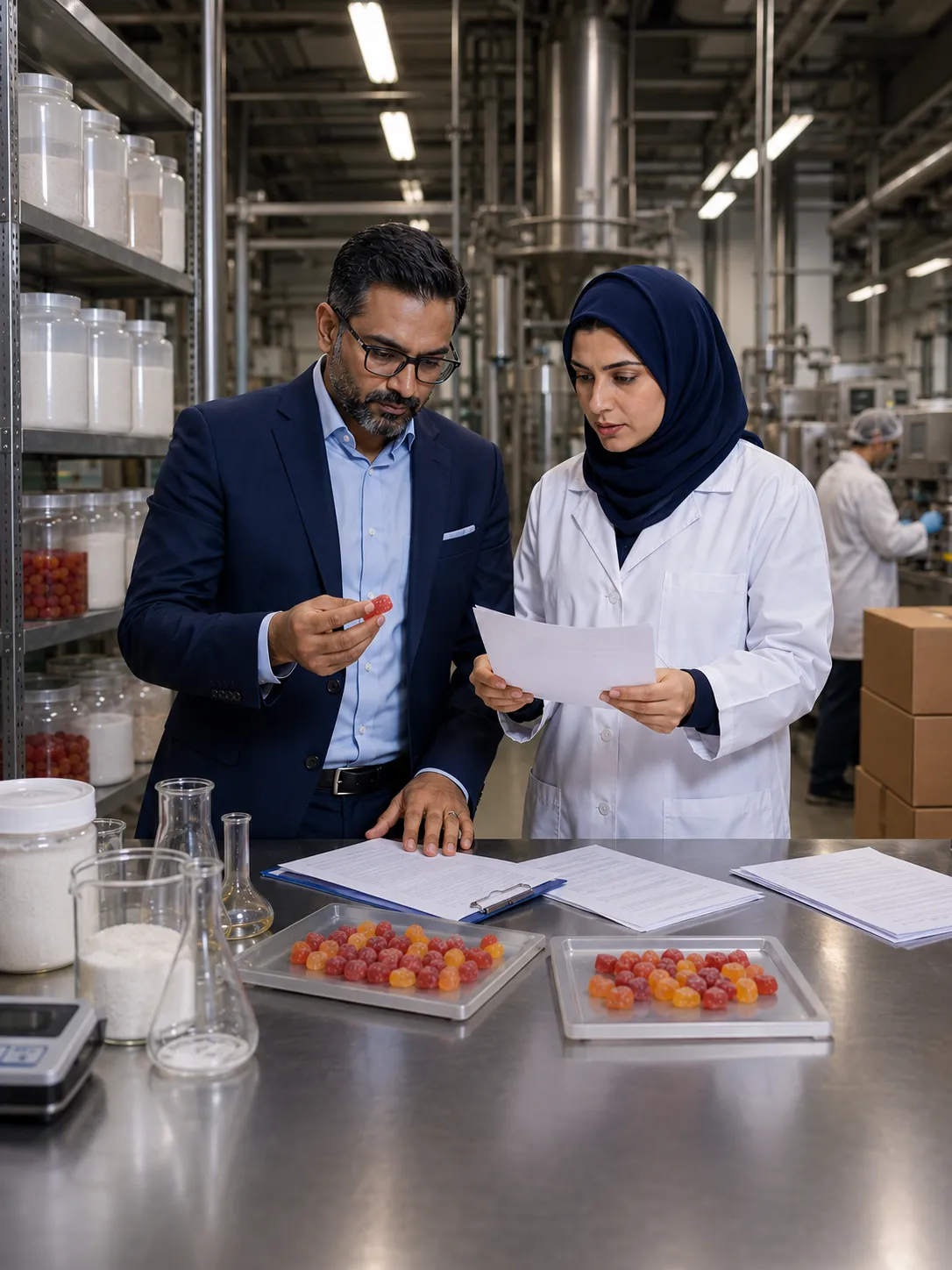
A European retail buyer was auditing a prospective contract manufacturer in Asia for a new line of vegan, allergen-free prenatal gummies. The manufacturer’s pricing was unbeatable, and the pilot samples tasted excellent. However, during the facility walkthrough, the buyer entered the depositing room and saw a massive machine stamping impressions into thousands of trays filled with dry cornstarch. Fine white powder hung in the air, coating the floors and the workers' uniforms.
The buyer halted the audit immediately. They realized that in a facility filled with airborne starch dust, it was physically impossible to guarantee an allergen-free product. Furthermore, the risk of microbial contamination from recycled starch was too high for a sensitive prenatal demographic. The deal was cancelled.
The method a manufacturer uses to physically form a gummy dictates its hygiene, its regulatory compliance, and its overall quality. In the supplement industry, this debate centers on two completely different technologies: the traditional Starch Mogul and the modern Starchless Depositing line.
If you are a brand founder or procurement manager, understanding the starchless depositing vs starch mogul debate is critical. Your choice of manufacturer will determine whether your product is seen as premium nutraceutical or cheap confectionary.
The Legacy System: The Starch Mogul
The starch mogul is the traditional workhorse of the confectionery industry. It is the technology that built the global candy market (think of gummy bears and jelly beans) over the last century.
How a Starch Mogul Works
- Thousands of wooden or plastic trays are filled with dry cornstarch.
- A machine presses a plaster mould board into the starch, leaving behind hundreds of gummy-shaped indentations (cavities).
- The liquid gummy base (usually gelatin) is pumped into these starch cavities.
- The trays are stacked and moved to a curing room for 24 to 72 hours. The dry starch acts as a massive desiccant, pulling moisture out of the liquid gummy until it sets into a firm chew.
- The trays are dumped onto a massive sieve. The starch falls through to be recycled and used again, while the finished gummies are sent through an air-blower and an oiling drum to clean off the remaining dust.
The Advantages of a Mogul
- Incredible Flexibility: You can change the shape of the gummy instantly just by changing the plaster stamp board. You can produce bears on Monday, stars on Tuesday, and berries on Wednesday with zero downtime.
- High Volume: Moguls are designed to pump out millions of units a day at a very low operational cost.
- Moisture Control: Because the starch actively pulls water out of the gummy, it is highly forgiving. Even if the formulation scientist slightly miscalculates the water activity ($a_w$), the starch will often correct the mistake during curing.
The Fatal Flaws for Nutraceuticals
While brilliant for cheap candy, the mogul presents massive risks for high-value functional supplements.
- Cross-Contamination: The cornstarch is recycled continuously. If the manufacturer runs a gummy containing soy lecithin or dairy on Monday, and your "allergen-free" gummy on Tuesday, your batch will absolutely be contaminated with trace allergens left in the starch bed.
- Microbial Risks: Recycled starch is organic matter. It absorbs moisture from every batch of gummies. Over time, it becomes a perfect breeding ground for bacteria, yeast, and mould. The starch must be regularly dried and sterilized, but the risk of microbiological failure on a final Certificate of Analysis (CoA) is significantly higher than with starchless systems.
- Dust and Hygiene: Mogul rooms are inherently dirty. The airborne starch dust makes pharmaceutical-grade clean-room conditions impossible.
Explore Export-Ready Manufacturing
The Modern Standard: Starchless Depositing
As the supplement industry evolved from basic vitamins to complex, high-value nutraceuticals (like probiotics, vegan botanicals, and high-dose Omega-3s), the manufacturing technology had to evolve to meet pharmaceutical standards. The solution was the starchless depositing line.
How Starchless Depositing Works
- Instead of using trays of starch, the machine features permanent, solid moulds made of food-grade silicone or Teflon-coated metal.
- The liquid gummy base (typically pectin) is injected directly into these clean, solid moulds.
- Because there is no starch to pull moisture out of the gummy, the formulation must be mathematically perfect before it is deposited. It is passed through a cooling tunnel to set the gel structure instantly.
- The gummies are popped out of the silicone moulds (often aided by a microscopic layer of food-grade oil) and moved to a climate-controlled curing room to finish drying.
- The empty moulds cycle back, are automatically washed and sterilized, and are ready for the next deposit.
The Advantages of Starchless Systems
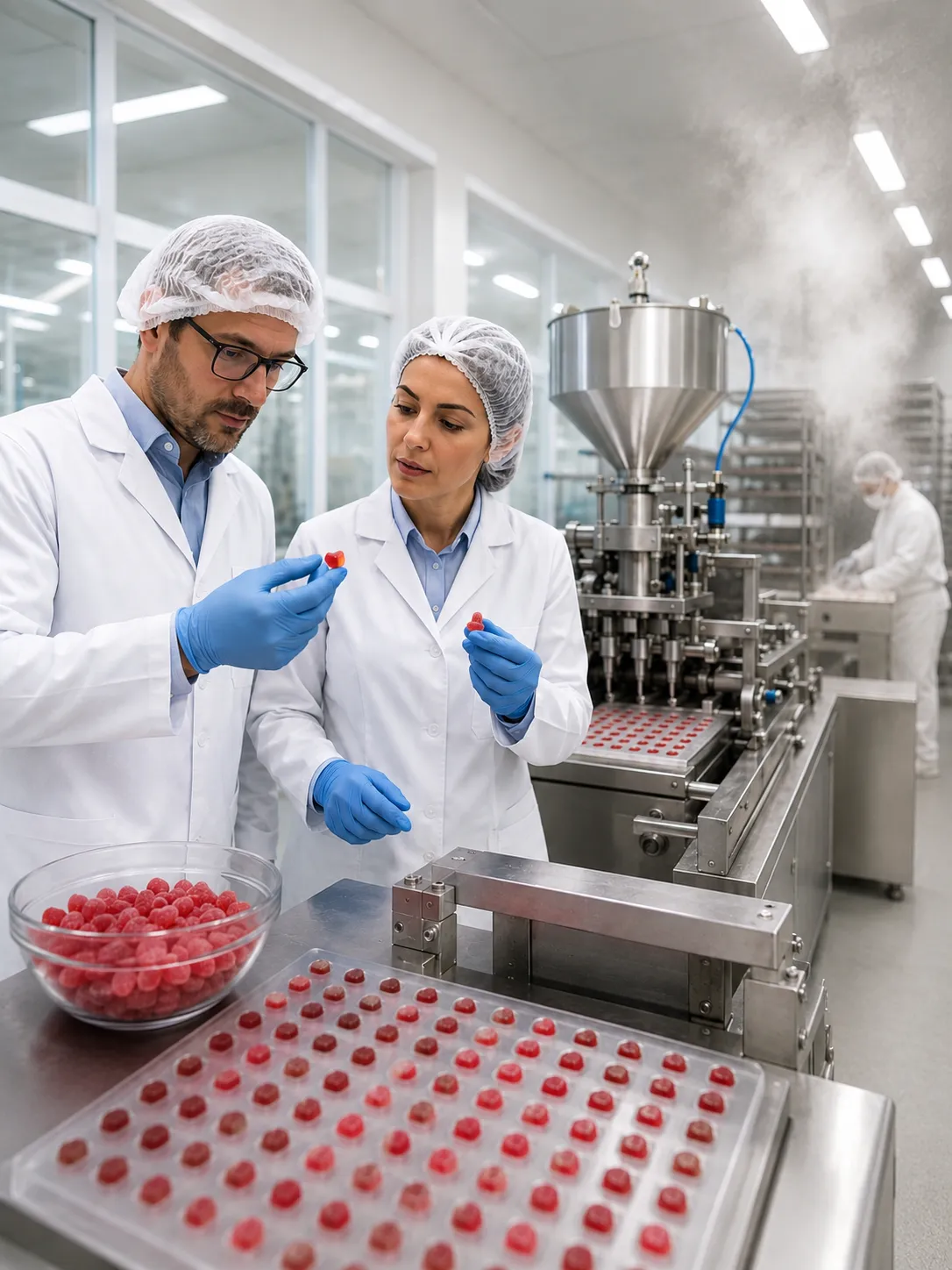
- Absolute Hygiene (The Clean Room): There is no dust, no airborne particles, and no recycled organic matter. Starchless depositing occurs in highly controlled clean-room environments, virtually eliminating the risk of microbial contamination.
- Zero Cross-Contamination: Because the silicone moulds are washed and sterilized between runs (or even between depositing cycles), a manufacturer can confidently run a dairy-containing product and then switch to an allergen-free product without risking trace contamination. This is vital for brands making strict vegan or allergen-free claims.
- Precision Dosing: Starchless depositors use highly advanced, servo-driven pumps. They deposit the exact same micro-gram weight of liquid into every single mould. This guarantees that every gummy contains the exact same dose of active ingredients, which is critical for passing strict retail QA audits and regulatory inspections.
- Pectin Optimization: Pectin sets rapidly as it cools. Starchless systems, with their integrated cooling tunnels, are perfectly designed to handle the rapid setting time of premium vegan pectin bases.
The Limitations of Starchless Systems
- Inflexibility in Shape: Changing the shape of a gummy means physically unbolting and replacing hundreds of expensive silicone or metal moulds. It is a slow, expensive process. This is why CMOs using starchless lines typically offer a limited menu of standard shapes (like domes or cubes) and charge high tooling fees for custom shapes.
- Formulation Rigidity: Starchless depositing is unforgiving. Because there is no starch bed to absorb excess water, the formulation scientist must calculate the Brix level and water activity ($a_w$) perfectly in the mixing tank. If the formula is wrong, the gummies will never set, and the batch is ruined. It requires a much higher caliber of R&D talent to operate successfully.
Explore Functional Gummy Manufacturing
Which Technology Should Your Brand Choose?
If you are a brand deciding between contract manufacturers, you must align the facility's technology with your brand positioning.
You might tolerate a Starch Mogul if:
- You are producing a cheap, mass-market, gelatin-based multivitamin.
- Your primary competitive advantage is the lowest possible unit cost.
- You do not make strict allergen-free or clean-label claims.
- You require highly custom, intricate gummy shapes to stand out on the shelf.
You absolutely require Starchless Depositing if:
- You are producing a premium, functional nutraceutical (e.g., probiotics, nootropics, high-dose botanicals).
- You are using a vegan, pectin-based formulation.
- You require strict allergen-free, Kosher, or Halal certifications.
- You are exporting to highly regulated markets (like the EU, UK, or Australia) where microbial failure and cross-contamination are major red flags for customs authorities.
FAQ
Can a manufacturer clean the starch in a mogul to make it safe? Yes, manufacturers use starch conditioning systems that continuously sift, dry, and heat-treat the starch to reduce microbial loads. However, conditioning reduces risk; it does not eliminate it. For a premium brand, the inherent risk of recycled organic material is often unacceptable to their QA department.
Why are gummy bears always made in a mogul? The intricate details of a classic gummy bear - the ears, the nose, the paws - require a 3D impression that is very easy to stamp into starch, but very difficult to release cleanly from a solid silicone mould without tearing. Starchless gummies typically feature smoother, more geometric shapes (like domes, gumdrops, or simple cubes) to ensure a clean release from the mould.
Is starchless depositing more expensive? The capital expenditure for the manufacturer is significantly higher to install a starchless line. Consequently, the minimum order quantities (MOQs) and the per-unit costs are sometimes slightly higher than a mogul line. However, the premium positioning, the elimination of rejected batches due to microbial failure, and the ability to pass strict retail audits provide a vastly superior ROI for the brand.
Demand Pharmaceutical-Grade Hygiene
If you are building a premium supplement brand, your manufacturing process must reflect your commitment to quality. The "candy factory" approach of the past is no longer sufficient for modern functional nutraceuticals.
Probiota Innovations exclusively utilizes state-of-the-art starchless depositing technology. Our clean-room manufacturing environment ensures absolute hygiene, precision dosing, and zero cross-contamination for our premium, pectin-based gummy formulations.
Request a Project Brief Learn about Vegan & Pectin Gummies
Want to discuss your formulation?
Our experts help brands launch technically complex probiotic and functional gummies.