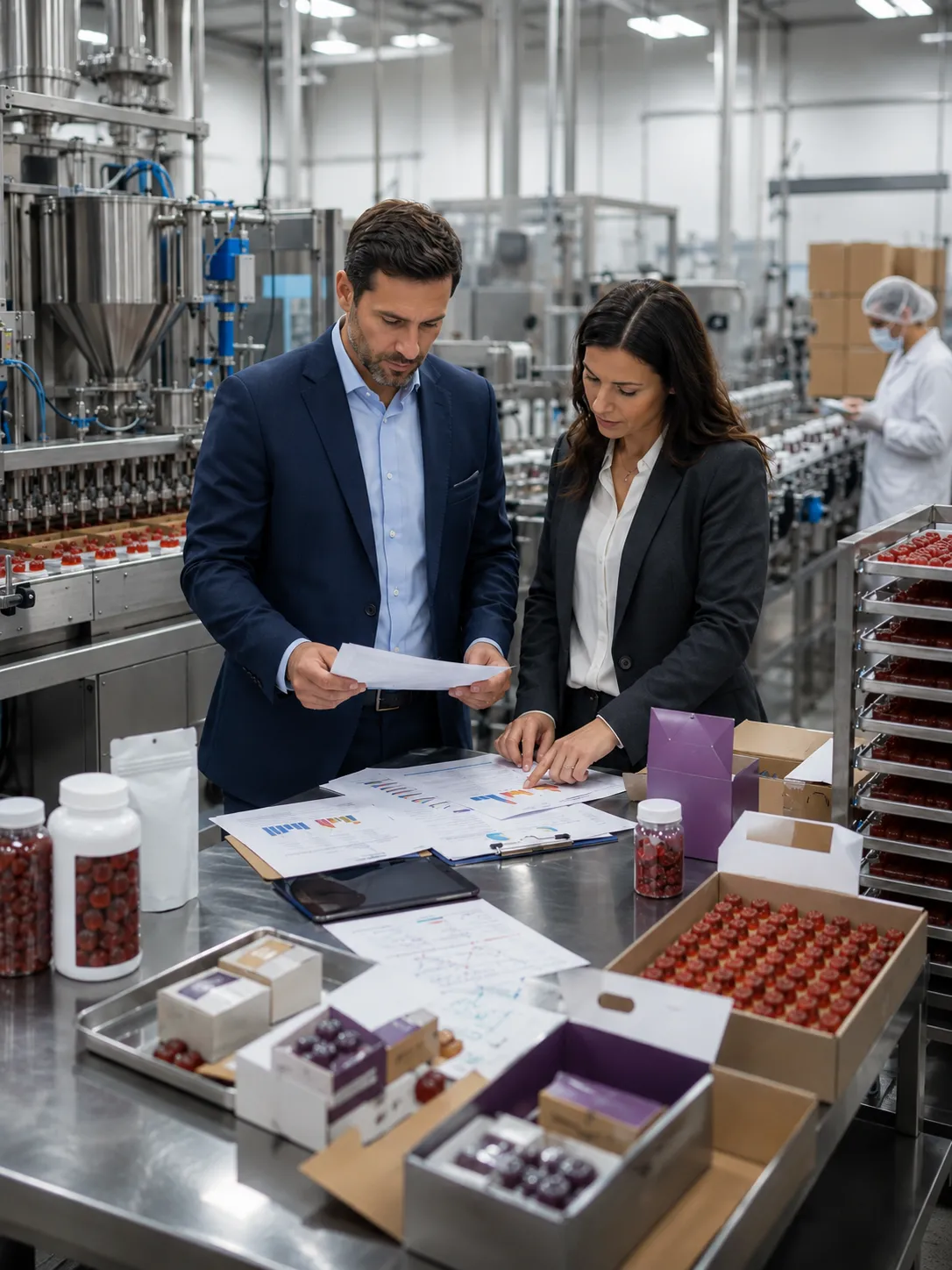
Private Label vs Custom Formulation: Which Gummy Strategy Wins?
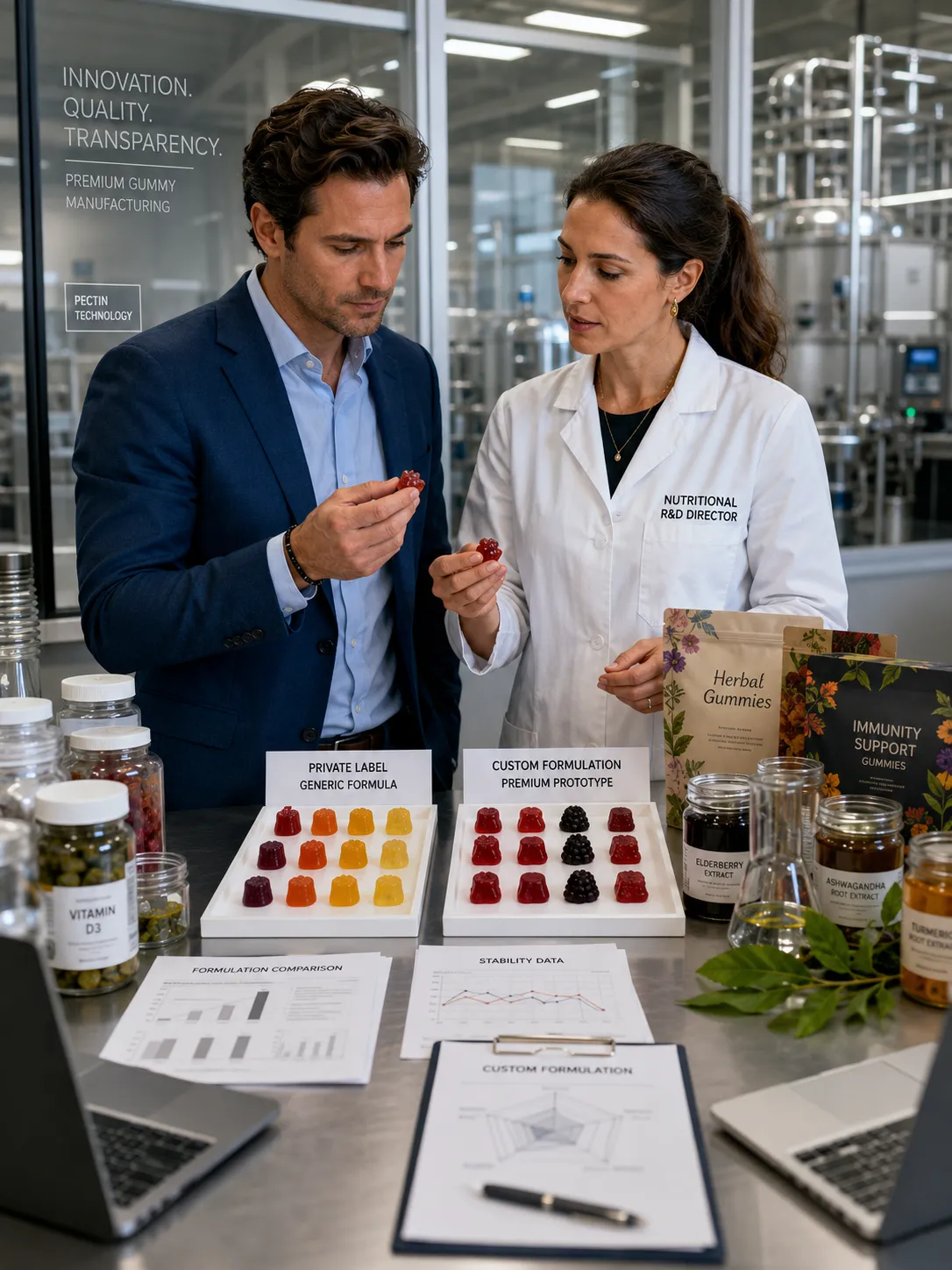
A fitness influencer with two million Instagram followers decided to launch a supplement brand. Looking for the fastest route to market, they partnered with a "Private Label" gummy manufacturer, selected a standard Apple Cider Vinegar (ACV) gummy from a catalog, slapped their logo on the bottle, and launched. The first month generated $200,000 in sales.
By month three, sales had crashed. Why? Because the exact same ACV gummy - manufactured in the exact same facility, with the exact same taste and texture - was being sold by fifty other brands on Amazon for half the price. The influencer had no product differentiation, no intellectual property, and no defensible moat. They were selling a commodity in a premium bottle, and the market figured it out.
When launching a new functional gummy brand, the very first decision you must make dictates your entire commercial trajectory: Do you buy a pre-made formulation off the shelf, or do you engineer a unique product from scratch?
The private label vs custom formulation gummies debate is the dividing line between building a quick cash-flow operation and building an enterprise-value brand. Here is a deep dive into the strategic advantages, hidden costs, and ultimate ROI of both manufacturing strategies.
Strategy 1: The Private Label (White Label) Route
In a private label strategy, the contract manufacturer owns a pre-developed, fully stabilized gummy formulation (e.g., a standard 500mcg Biotin gummy). They manufacture this gummy in massive bulk volumes. When a brand places an order, the manufacturer simply takes the bulk gummies, puts them in a bottle, and applies the brand's custom label.
The Strategic Advantages
- Speed to Market: Because the formulation already exists, and stability testing is already complete, a brand can launch a private label gummy in as little as 4 to 6 weeks. It is the fastest way to get a physical product into the market.
- Low Barrier to Entry (MOQs): Contract manufacturers run private label formulas in massive, continuous batches. Because they are pooling the volume across dozens of brands, they can offer extremely low Minimum Order Quantities (MOQs). A brand can often start with just 1,000 to 5,000 bottles, drastically lowering the initial capital risk.
- Zero R&D Costs: There are no formulation fees, no pilot batch costs, and no stability testing fees. The manufacturer absorbs all the R&D costs upfront because they amortize it across hundreds of clients.
The Strategic Disadvantages (The Commodity Trap)
- Zero Differentiation: You are selling the exact same product as your competitors. If a consumer buys your $30 "premium" sleep gummy, and then buys a $12 drugstore sleep gummy, and they taste and feel identical, you will lose that customer forever. You cannot compete on product efficacy; you can only compete on marketing spend.
- No Intellectual Property (IP): You do not own the formula. You cannot patent it. If you decide to sell your brand to a larger conglomerate, the buyer will assign zero enterprise value to the physical product because you do not own the underlying IP. You only own the brand trademark.
- Inability to Optimize: If customers complain that the gummy is too sweet, or that it lacks a specific active ingredient, you cannot change the formula. You are locked into the manufacturer's rigid catalog specifications.
Explore Functional Gummy Manufacturing
Strategy 2: Custom Formulation
In a custom formulation strategy, the brand works with the manufacturer's R&D team to engineer a completely unique product from the ground up. The brand dictates the active ingredients, the specific dosages, the gelling agent (e.g., demanding vegan pectin instead of gelatin), the sweetener system, and the flavour profile.
The Strategic Advantages
- The Defensible Moat: A custom formulation allows you to build a product that no one else has. You can combine trending ingredients (like Ashwagandha + L-Theanine + live Probiotics) in a specific ratio that addresses a unique consumer pain point. This clinical differentiation justifies a premium retail price and drives massive consumer loyalty.
- IP Ownership: If you negotiate the Master Manufacturing Agreement correctly, you (the brand) own the custom formula. This IP becomes a tangible asset on your balance sheet, significantly increasing the valuation of your company during an acquisition.
- Total Control over Quality: You decide the quality of the inputs. Instead of accepting the cheap, generic botanical extracts used in private label products, you can demand premium, clinically studied, patented extracts (like KSM-66 or Sensoril) that actually deliver results.
The Strategic Disadvantages
- Capital Intensive: Custom formulation requires a significant upfront investment. You must pay R&D fees, pilot batch fees, and cover the cost of a 3-month accelerated stability testing protocol.
- Higher MOQs: Because the manufacturer must halt their line, clean the equipment, and configure the depositing machinery specifically for your unique recipe, they require larger production runs to justify the setup time. A custom formulation pilot commercial batch typically starts at 15,000 to 25,000 units minimum.
- Slower Speed to Market: Engineering a stable gummy takes time. The iterative process of lab sampling, flavour tweaking, pilot batching, and stability testing means a custom product launch typically takes 4 to 8 months from brief to finished bottle.
Explore Export-Ready Manufacturing
Which Strategy Wins? The Evolution Model
For modern, highly competitive supplement markets (like the US, UK, and GCC), the "winner" depends on the brand's lifecycle stage.
Phase 1: The Cash-Flow Hustle (Private Label) Many brands start with private label simply to test their marketing funnel. If you have a brilliant social media strategy but zero capital, private labeling a basic multivitamin gummy allows you to generate initial cash flow and prove that your customer acquisition model works. However, you must view this as a temporary stepping stone, not a long-term strategy.
Phase 2: The Enterprise Brand (Custom Formulation) Once a brand has established an audience and secured capital, they almost universally pivot to custom formulation. To get stocked in major retail pharmacies (like Boots or Target), or to secure Series A venture capital funding, a brand must demonstrate product differentiation. The market is too saturated to build a $50M brand on a generic catalog formula.
The Hybrid Approach (The Formulation Tweak)
Some advanced manufacturers offer a middle ground: a "base modification." They take a stable, proven private label base (e.g., a perfect vegan pectin matrix with a great strawberry flavour) and allow the brand to inject a custom active ingredient (e.g., a specific probiotic strain) into it. This drastically reduces the R&D time and stability risk compared to a fully custom build, while still providing a unique, differentiated product to the market.
FAQ
Can I switch from Private Label to Custom Formulation later? Yes, and many successful brands do exactly this. Once they secure cash flow from their initial private label launch, they invest that capital into R&D for a "Version 2.0" custom formulation that replaces the original product, offering better efficacy and a stronger brand moat.
If I custom formulate a gummy, do I have to source the ingredients myself? Usually, no. This is known as "Turnkey Custom Manufacturing." A premium contract manufacturer will handle the procurement of all the custom ingredients you specify, leveraging their bulk purchasing power and handling all the raw material QC testing before production begins.
How do I know if a manufacturer is offering a true custom formula? Ask for the Master Formulation Record (MFR) and demand exclusivity. If a manufacturer offers to make you a "custom" formula in 2 weeks with zero R&D fees and an MOQ of 2,000 bottles, they are not custom formulating - they are just pulling an existing recipe from their database and lying to you. True custom gummy R&D takes months and significant capital.
Build Your Defensible Moat
If you are serious about building an enterprise-value supplement brand, you must eventually move beyond commodity private labeling. You need a manufacturing partner equipped for deep formulation science.
Probiota Innovations does not sell generic private label catalog formulas. We are an R&D-driven contract manufacturer specializing exclusively in complex, custom-engineered pectin gummies. We build the differentiated, high-efficacy products that premium brands use to dominate their categories.
Request a Project Brief Learn about Vegan & Pectin Gummies
Want to discuss your formulation?
Our experts help brands launch technically complex probiotic and functional gummies.