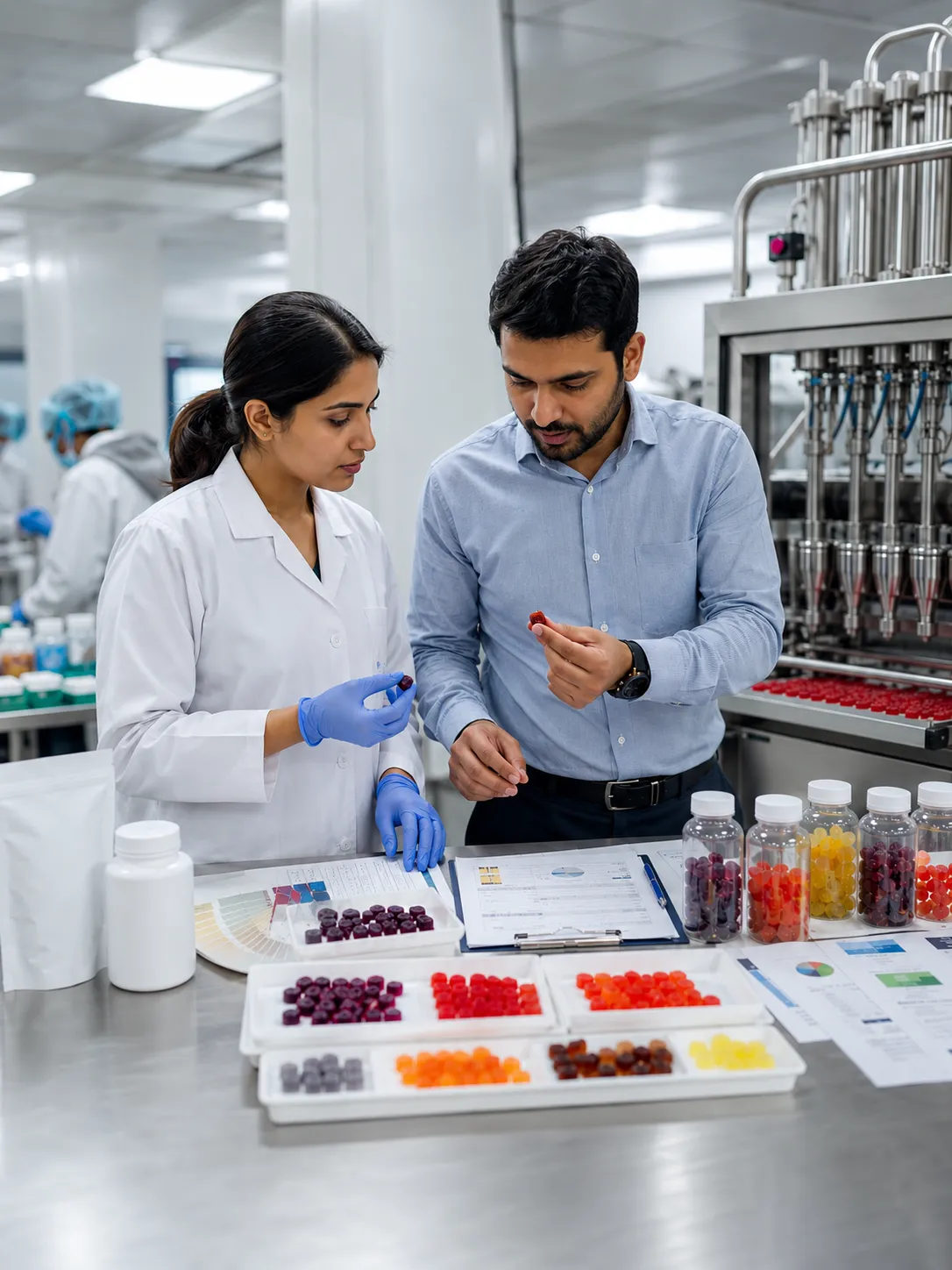
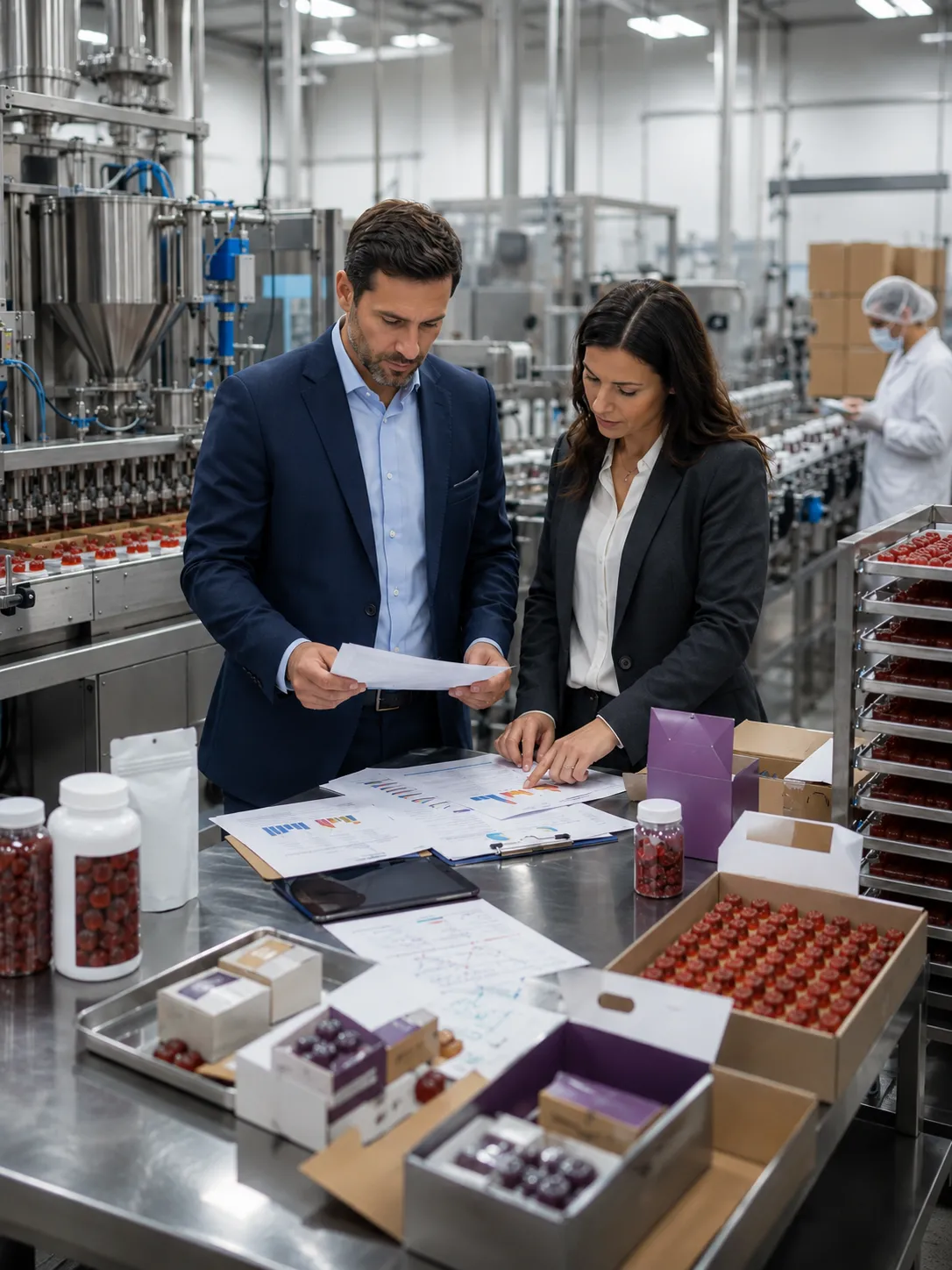
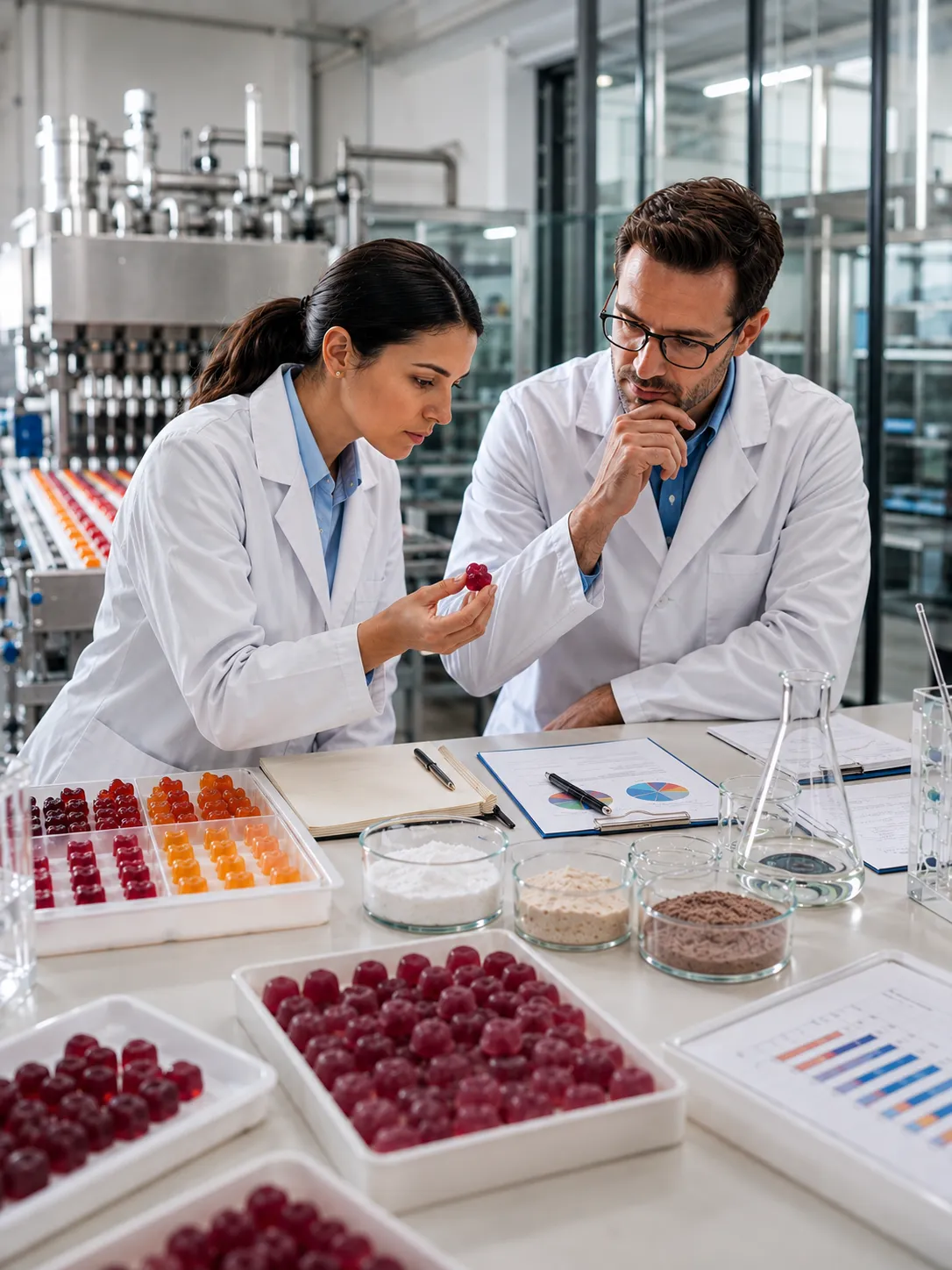
Continuous vs. Batch Cooking in Commercial Gummy Manufacturing
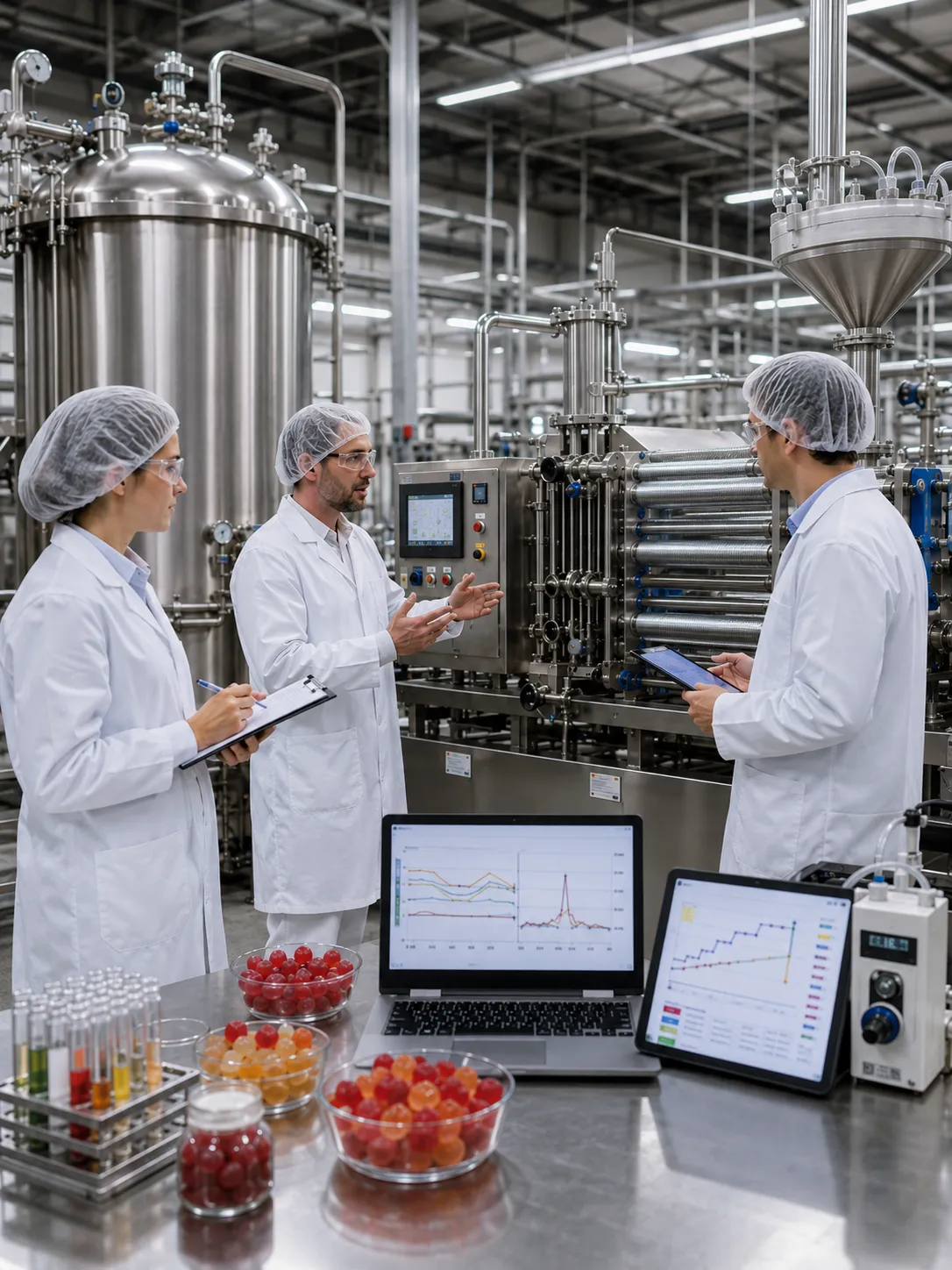
Continuous vs. Batch Cooking in Commercial Gummy Manufacturing
When a supplement brand begins looking for a Contract Manufacturing Organization (CMO) to produce their new gummy line, they often encounter highly technical terms regarding the factory's capabilities. One of the most critical distinctions is the method of preparing the gummy mass: Batch Cooking versus Continuous Cooking.
To a brand founder, this might sound like irrelevant factory jargon. However, the cooking method a manufacturer utilizes dictates the Minimum Order Quantity (MOQ), the consistency of the active ingredients, the thermal degradation of sensitive vitamins, and the ultimate cost-per-unit of your product.
Understanding the difference between Batch and Continuous cooking is essential for selecting the right manufacturing partner for your specific scale and formulation. Here is the technical breakdown.
1. Batch Cooking: The Artisanal and Pilot Approach
Batch cooking is exactly what it sounds like. It is the industrial equivalent of making soup on a stove.
How It Works
- All the base ingredients (water, sugar, glucose syrup, and pectin/gelatin) are weighed and added to a single, large, jacketed mixing kettle.
- The mixture is heated (often using steam jackets) to a specific temperature (typically around 105°C to 110°C) to boil off excess water and activate the gelling agent.
- Once the target Brix level (dissolved solids) is reached, the heat is turned off, and the active ingredients, flavours, colours, and acids are added and mixed in.
- The entire batch is then pumped to the depositor head to be injected into the moulds.
The Advantages of Batch Cooking
- Low MOQs: Because you are making one distinct "pot" at a time, batch cooking is perfect for pilot runs, R&D testing, or very small initial orders (e.g., 50,000 to 100,000 gummies).
- Flexibility: It is very easy to switch from a Strawberry Vitamin C gummy to a Blueberry Melatonin gummy. The kettle is emptied, cleaned, and a new batch begins.
The Drawbacks (The "Holding" Problem)
The primary risk of batch cooking is thermal degradation. If a manufacturer cooks a 500kg batch, it might take 2 hours for the depositor to pump all that mass into the moulds. During those 2 hours, the gummy mass must be kept hot (around 85°C for pectin) so it doesn't set in the pipes. Sensitive active ingredients (like Probiotics or specific Vitamins) sitting in an 85°C kettle for two hours will experience massive "die-off" or degradation, leading to inconsistent dosing between the first gummy deposited and the last.
Learn about Probiotic Gummies Manufacturing
2. Continuous Cooking: The High-Speed Precision Engine
Continuous cooking is the gold standard for high-volume, commercial-scale gummy manufacturing. It completely reimagines the thermal process.
How It Works
Instead of a single large pot, a continuous cooker uses a sophisticated heat exchanger (often a scraped-surface heat exchanger or a coil cooker).
- The raw slurry (water, sugars, gelling agent) is continuously pumped through a heated tube.
- The slurry is flash-heated to boiling temperature for only a few seconds as it moves through the system, instantly achieving the required Brix level.
- It immediately moves into a vacuum chamber where the temperature drops rapidly.
- Finally, it flows into an automated inline dosing station. Here, precise micro-pumps inject the active ingredients, flavours, and acids directly into the stream just seconds before the mass reaches the depositor head.
The Advantages of Continuous Cooking
- Zero Thermal Degradation: Because the active ingredients (like delicate botanicals or heat-sensitive vitamins) are injected at the very end of the line and are only exposed to heat for seconds rather than hours, the survival rate of the actives is exceptional. This guarantees uniform dosing across millions of gummies.
- Massive Scale and Efficiency: A continuous line never stops. It can produce millions of gummies per shift, driving down labour costs and significantly reducing the cost-per-unit for the brand.
The Drawbacks
- High MOQs: You cannot run a continuous line for a small order. The sheer volume of material required simply to "prime" the pipes and heat exchangers means that continuous cooking is generally reserved for runs of 500,000 to 1,000,000+ gummies.
- Less Flexibility: Changing flavours or active formulas on a continuous line requires extensive flushing and cleaning (Changeover Time), making it inefficient for brands wanting to run 10 different SKUs in tiny quantities.
Explore Functional Gummy Manufacturing
3. Which Method Should Your Brand Choose?
Your choice of manufacturer should align with your immediate commercial needs and your long-term scaling strategy.
Choose a Batch Cooking CMO If:
- You are a startup launching your first product and need to test the market with a low MOQ (under 100,000 units).
- You are formulating a highly complex product with heat-stable ingredients that require slow, deliberate emulsification.
- You want to run a diverse product line of many different SKUs in small quantities.
Choose a Continuous Cooking CMO If:
- You are an established brand scaling up a hero product and need to drive down your unit economics (Cost of Goods Sold).
- You are formulating with highly heat-sensitive ingredients (like certain vitamins, enzymes, or advanced botanical extracts) and require absolute precision in dosing consistency.
- You require millions of units per month to supply major retail chains or massive D2C volume.
FAQ
Can probiotics survive batch cooking? It is extremely difficult. If probiotics are added to a hot kettle and held there for an hour during the depositing phase, the massive heat exposure will kill the majority of the live cultures, requiring exorbitant "overages" to meet label claims. For live probiotics, continuous inline dosing or post-production dusting is mandatory. However, Postbiotics (heat-inactivated strains) can survive batch cooking easily.
Does the cooking method affect the texture of the gummy? Yes. Continuous cookers, particularly those using vacuum chambers, remove air bubbles and excess moisture incredibly efficiently. This often results in a clearer, more structurally uniform gummy with a more precise "bite" than those produced in older batch kettles.
Why do continuous lines have higher MOQs? The "dead space" in the pipes and machinery of a continuous cooker might hold 50kg to 100kg of gummy mass at any given time. If you only order 100kg of product, half of your order is lost just priming the machine. It only becomes economically viable at high volumes.
Scale Your Manufacturing with Precision
Understanding the machinery behind your product is the key to protecting your margins and ensuring your active ingredients actually survive the factory floor.
At Probiota Innovations, we utilize state-of-the-art manufacturing technologies designed for both precise pilot runs and massive commercial scaling. Our advanced thermal processing and inline dosing capabilities ensure that even the most heat-sensitive formulations achieve perfect, uniform dosing across millions of premium pectin gummies.
Request a Project Brief Explore Export-Ready Manufacturing
Want to discuss your formulation?
Our experts help brands launch technically complex probiotic and functional gummies.