The Anatomy of a Gummy Depositor: Manifolds, Nozzles, and Accuracy
The Anatomy of a Gummy Depositor: Manifolds, Nozzles, and Accuracy
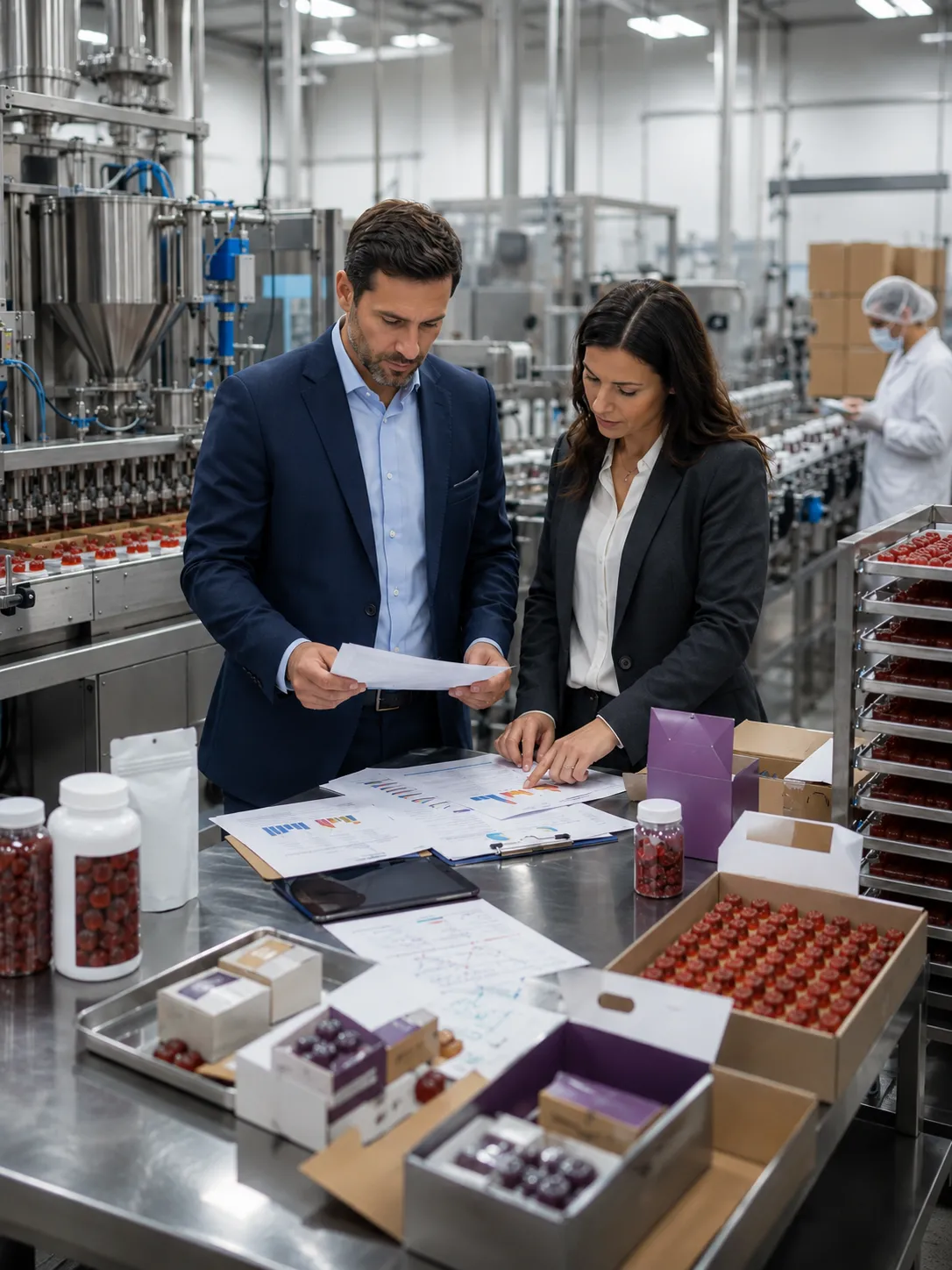
When a supplement brand founder visits a contract manufacturing facility for the first time, they are inevitably drawn to the Depositor. It is the beating heart of the production floor - a massive, stainless steel marvel of engineering that rhythmically squirts thousands of precise liquid droplets into moving moulds every minute.
To the untrained eye, it looks like a simple pump. In reality, a modern starchless gummy depositor is a highly calibrated, extremely sensitive instrument. It is responsible for the exact dosing accuracy of the active ingredients, the physical shape of the gummy, and the overall yield of the entire production run.
If your manufacturer operates cheap or poorly maintained depositing equipment, your gummies will suffer from inconsistent dosing (failing lab assays) and severe physical defects. Here is a technical breakdown of the anatomy of a commercial gummy depositor and why it dictates the quality of your product.
1. The Hopper and Jacketing System
Before the gummy mass is deposited, it sits in the Hopper - the large funnel-shaped reservoir at the top of the machine.
Temperature Control (The Water Jacket)
In pectin gummy manufacturing, temperature is everything. If the pectin mass drops below approximately 85°C, it will begin to "pre-gel" (set) inside the machine, destroying the batch and clogging the entire system. To prevent this, the hopper is "jacketed." It features a double wall filled with continuously circulating hot water or thermal oil. This ensures the gummy mass remains in a perfectly liquid, low-viscosity state right up until the millisecond it is pumped into the mould.
- The Failure Point: Cheap depositors often have "cold spots" in their jacketing systems. If the mass cools unevenly, the viscosity changes, leading to massive weight variations between individual gummies.
2. The Servo-Driven Piston Block
The true engine of the depositor is the piston block. This is what physically pushes the liquid out of the hopper and into the moulds.
Mechanical vs. Servo-Driven
Older or cheaper depositors use mechanical cams to drive the pistons. These are notoriously inaccurate and struggle with highly viscous (thick) formulations common in high-load functional gummies.
Modern, premium facilities utilize Servo-Driven Pistons.
- A high-precision servo motor controls the exact stroke length of the pistons.
- The Advantage: If a brand requests a precise 3.2-gram gummy to perfectly hit a specific active payload limit, the machine operator can digitally adjust the servo stroke to an accuracy of 0.01 grams. This ensures that every single gummy in a 1-million-unit run weighs exactly the same, which is a fundamental requirement for passing strict FDA or TGA regulatory assay audits.
Explore Functional Gummy Manufacturing
3. The Manifold and the Nozzles
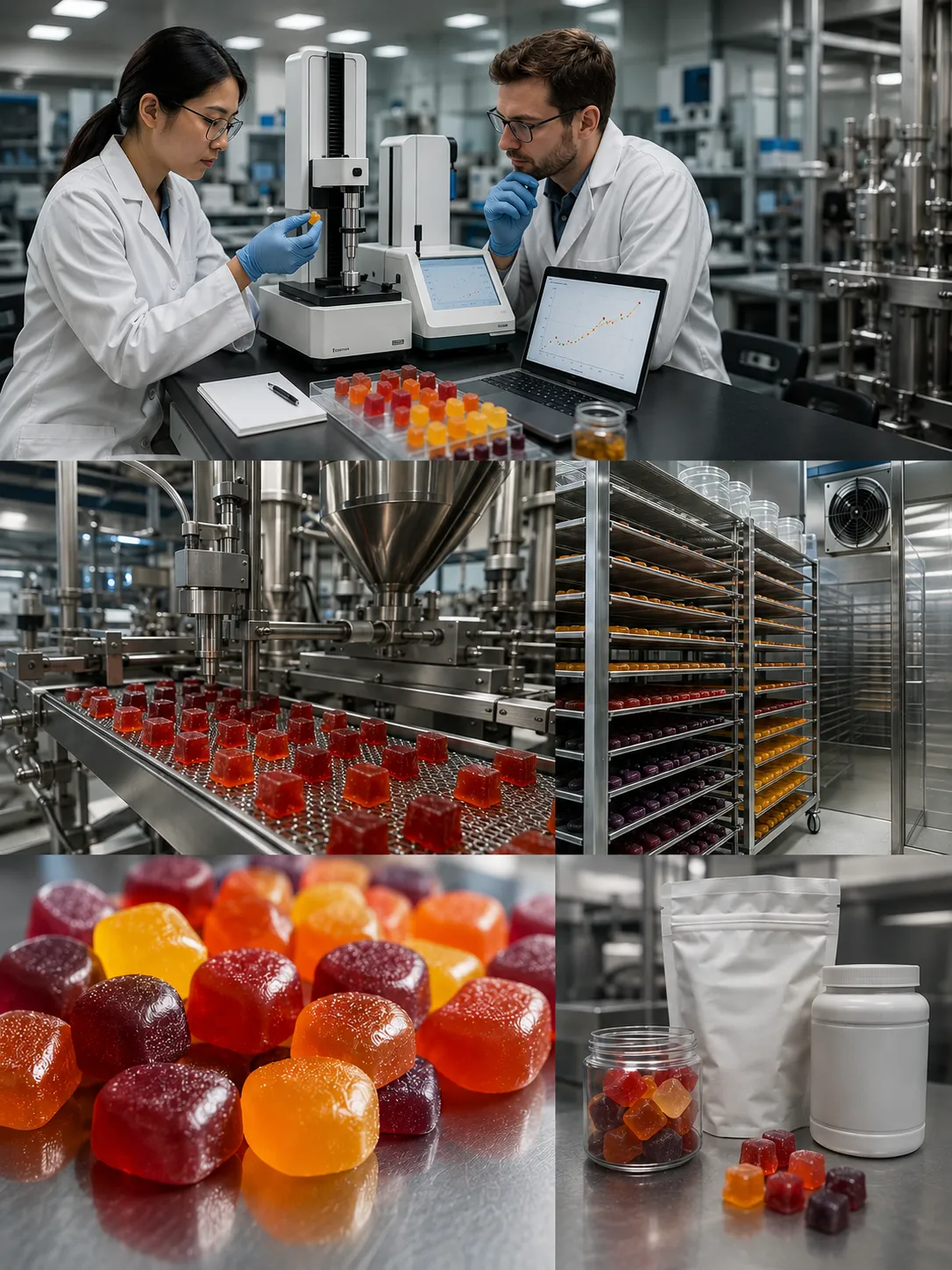
The liquid leaves the pistons and enters the Manifold, which distributes the mass to the individual Nozzles that align perfectly with the cavities in the moving mould boards below.
The Problem with "Tailing"
The most common visual defect in gummy manufacturing is "tailing." This occurs when the nozzle finishes depositing the liquid, but a thin string of sticky pectin remains attached to the nozzle and falls across the top of the mould. When the gummy sets, it looks like it has a long, ugly tail.
The "Suck-Back" Solution
Elite depositors utilize advanced nozzle design and a "Suck-Back" mechanism. Immediately after the servo piston pushes the required 3 grams of liquid out, it reverses direction for a microsecond. This creates a tiny vacuum that sucks the liquid back up into the tip of the nozzle, cleanly severing the flow and ensuring a perfectly flat, tail-free gummy.
4. Center-Filling (Co-Extrusion) Capabilities
The most advanced depositors on the market are "Co-Extruders." These machines possess dual hoppers and complex "tube-in-tube" nozzles.
The Liquid-Center Gummy
Co-extrusion allows the manufacturer to pump a solid pectin shell from the outer tube while simultaneously pumping a liquid syrup (or a different coloured gummy mass) from the inner tube.
- The R&D Application: This is not just a novelty. For highly reactive or awful-tasting ingredients (like raw iron or pungent botanical oils), the manufacturer can hide the active ingredient entirely within the liquid center, masking the taste completely with the sweet pectin shell.
5. Cleaning In Place (CIP)
In functional supplement manufacturing, cross-contamination is a massive liability. You cannot have residual melatonin from a sleep gummy run ending up in a batch of children's immune gummies.
The Turnaround Bottleneck
Between different product runs, the entire depositor must be completely broken down, sanitized, and reassembled. In older machines, this requires manual scrubbing of the pistons and manifolds, which takes hours and risks human error.
Automated CIP
Premium starchless depositors are engineered with integrated CIP (Clean In Place) systems. The machine can flush its own hopper, manifolds, and nozzles with high-pressure, high-temperature sanitizing chemicals and sterile water, drastically reducing changeover time and guaranteeing absolute pharmaceutical-grade cleanliness between batches.
Explore Export-Ready Manufacturing
FAQ
Why do starch moguls have different depositing systems than starchless lines? Starch mogul lines (the traditional method) deposit the liquid into trays of stamped cornstarch. Because starch absorbs moisture, the liquid can be deposited much wetter (lower Brix). Starchless lines deposit into rigid silicone or metal moulds, requiring the liquid to be deposited at its final, much thicker consistency, requiring vastly more powerful and precise servo-pistons.
How fast can a commercial depositor run? A high-end commercial starchless line can operate at 30 to 60 "strokes" per minute. If the mould board has 200 cavities, the machine is depositing between 6,000 and 12,000 perfect gummies every single minute.
Can a depositor handle gummies with fruit pieces or seeds inside? Only if the nozzle diameter and piston clearances are explicitly engineered for particulates. Standard depositors will instantly clog or crush the inclusions. Formulating with physical particulates (like chia seeds) requires highly specialized depositing equipment.
Manufacture with Absolute Precision
Your product's efficacy, legality, and aesthetic appeal are entirely dependent on the mechanical precision of the factory floor. If your manufacturer relies on outdated, mechanical depositing equipment, you are absorbing massive commercial risk.
At Probiota Innovations, we operate state-of-the-art, servo-driven starchless depositing technology. Our advanced jacketing, suck-back nozzles, and rigorous CIP protocols ensure that every single gummy we produce is dimensionally flawless, perfectly dosed, and free from cross-contamination, ready for the most demanding global retail markets.
Request a Project Brief Explore Functional Gummy Manufacturing
Want to discuss your formulation?
Our experts help brands launch technically complex probiotic and functional gummies.